


Zero single-use plastic at mealtime means every cup, bottle, and container a guest touches is designed to be washed and used again, not thrown away after one meal. At Reconnect, an all-inclusive eco-resort on Buka Buka Island in the Togean Islands, that principle shapes three daily meals plus afternoon tea for every guest, with no plastic water bottles, no miniature toiletry-style condiment packets, and no disposable cutlery anywhere on site.
TL;DR
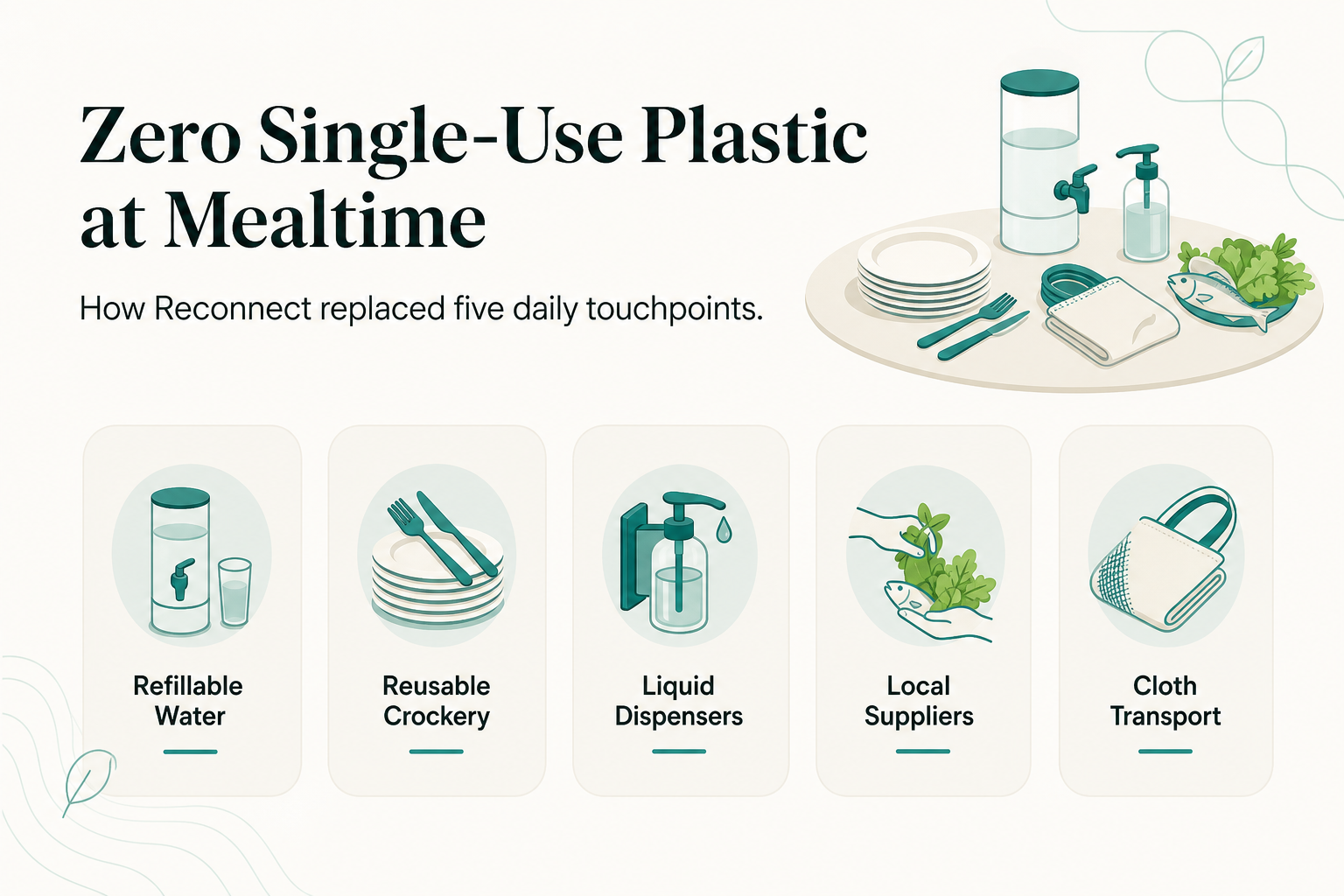
- Reconnect runs a zero single-use plastic policy across all meals: refillable water dispensers, reusable crockery, cloth bags, and liquid soap dispensers replace disposable equivalents.
- The EU Single-Use Plastics Directive and UN Environment Programme both define single-use plastic by one test: was it designed to be reused, or thrown away after one trip.
- A typical 200-room hotel generates around 300,000 single-use plastic items a month; a 20-room resort built without that model from day one never creates that waste stream at all.
- Indonesia's national ban on certain single-use plastics (bags, straws, styrofoam) takes full effect by the end of 2029; Central Sulawesi already has community-level restrictions in Tentena and Sigi Regency.
- Supplier choice matters as much as guest-facing reusables: sourcing from neighboring villages cuts packaging at the point of origin, not just at the point of use.
About the author: This article is written from Reconnect's operational experience running a fully off-grid, 20-room island resort where every meal for every guest has been served without single-use plastic since opening. That day-to-day mealtime logistics, not a sustainability report, is the basis for the detail below.
What Actually Counts as "Single-Use Plastic" at a Resort?
The EU Single-Use Plastics Directive defines it precisely: a plastic product not designed for multiple trips or rotations back to a producer for refill or reuse. The UN Environment Programme uses the same logic in plainer terms: anything typically used once, then discarded or recycled.
That definition matters because it draws a hard line. A glass water bottle refilled daily is not single-use, even though it is technically disposable if broken. A plastic water bottle handed to a guest once is single-use, even if it happens to be recyclable. Recyclability doesn't change the category, only what happens after disposal.
This is also why "recycled content" doesn't solve the problem. A plastic bottle made from 100% recycled material and used once is still a single-use item under this definition. It still has to be manufactured, shipped, used once, and processed again. Some university sustainability policies now explicitly exclude recycled-content plastics from counting as reusable alternatives for exactly this reason.
Why Does Mealtime Generate So Much Plastic in the First Place?
Mealtime is where hospitality's plastic problem concentrates, because it repeats three or more times a day, every day, for every guest. The hospitality industry generates an estimated 150 million tons of single-use plastic waste annually, much of it from food service: individually wrapped condiments, plastic straws, disposable cups, and small amenity bottles that get replaced after a single use.
Scale that to a single property: a 200-room hotel runs through roughly 300,000 pieces of single-use plastic a month. Most of that volume comes from the food and beverage side of the operation, not the rooms.
The mechanism is simple. Each guest touches plastic multiple times a day rather than once at check-in, so small per-guest items multiply fast:
- Bottled water replaced daily, sometimes at every meal
- Straws and stirrers used once and discarded
- Condiment sachets and creamer cups
- Disposable cups for coffee, tea, and juice
- Cling film and plastic wrap in food storage and prep
A 20-room resort scales differently. Even at full occupancy, guest count stays a fraction of a 200-room property, so the item count never reaches that volume. But the bigger factor is design: if the system is built around reusables from the start, the disposable-item habit never forms in the first place.
How Does Reconnect Remove Plastic From Every Meal?
The system replaces each disposable item with a reusable equivalent at the point where a guest would normally reach for plastic. Every stay is all-inclusive full-board: three meals daily, afternoon tea, and unlimited coffee, tea, and water, all served without a single disposable cup or bottle.
Water. Guests get a refillable water bottle or reusable glass and refill it at a dispenser connected to Reconnect's own desalinated water system. There is no bottled water on the property, imported or local. This is also why bringing a reusable water bottle travel accessory from home fits naturally into a stay here, rather than being a nice-to-have.
Crockery and cutlery. Every meal is served on reusable plates and glassware with metal cutlery, washed and reused, not disposable trays or wrapped utensils.
Condiments and soap. Liquid soap comes from refillable dispensers, not single-use miniature bottles. Condiments are served from shared containers rather than individually packaged sachets.
Storage and transport. Cloth bags replace plastic bags for transporting produce from the mainland and storing dry goods in the kitchen.
| Mealtime Item | Common Industry Default | Reconnect's Approach |
|---|---|---|
| Drinking water | Bottled water, replaced per meal | Refillable dispenser fed by on-site desalinated water |
| Cutlery | Disposable or wrapped | Reusable metal, washed after each use |
| Soap and toiletries | Miniature single-use bottles | Refillable liquid soap dispensers |
| Produce transport | Plastic bags | Cloth bags |
| Condiments | Individual sachets | Shared reusable containers |
Why Do Supplier Choices Matter as Much as Guest-Facing Reusables?
A resort can eliminate every plastic cup on-site and still import plastic waste through its supply chain, which is why supplier choice is the other half of the equation. Reconnect sources through supplier partnerships with neighboring villages, which shortens the transport chain and reduces the packaging that typically protects goods over long distances.
Locally hired staff manage much of this sourcing directly, buying produce and fish from village suppliers rather than routing everything through a distant, packaging-heavy distribution chain. Shorter supply chains mean less need for the plastic wrap, crates, and preservative packaging that longer shipping routes require.
This matters more in the Togean Islands specifically than in most locations, because there is no municipal waste system to absorb plastic that does arrive. Anything that comes onto the island as packaging has to be shipped back out. Reducing plastic at the supplier level reduces that return-shipping burden before it starts.
What Happens to Marine Ecosystems When This System Fails?
Sulawesi's own marine ecosystems document the cost of getting this wrong. Studies in the Bangka Strait and Wakatobi record single-use plastic causing measurable coral damage: entanglement leads to necrosis, bleaching, and algal overgrowth on affected reef structures. Fish and turtles mistake plastic fragments for food, which is often fatal, and breakdown products enter the food chain as microplastics.
Reconnect is in the Togean Islands, a gateway to Togean Islands National Park, with direct reef access for guided snorkeling and diving around Buka Buka Island where visibility averages about 30 meters. A zero single-use plastic mealtime policy is a direct, practical response to what the surrounding reef research documents, not a marketing gesture layered on top of unrelated operations.
Indonesia's Ministry of Environment and Forestry has set a nationwide ban on shopping bags, straws, and styrofoam packaging for full implementation by the end of 2029. Central Sulawesi already has community-level movement ahead of that timeline, including the Plastic-Free Village Declaration in Tentena and restrictions in Sigi Regency.
Frequently Asked Questions
Does a zero single-use plastic policy cost more to run?
It shifts cost from consumables to reusable equipment: dispensers, refillable bottles, and metal cutlery are a one-time investment rather than a recurring purchase, though washing and maintenance add ongoing labor.
Does this policy apply only to meals, or resort-wide?
Resort-wide. Meals are where the policy is most visible day to day, but liquid soap dispensers, cloth bags, and reusable items extend through housekeeping and food storage as well.
How does this compare to other island resorts in Indonesia?
Few island properties combine full-board zero single-use plastic mealtime service with off-grid solar power and on-site desalinated water at the same time; most rely on bottled or trucked-in water.
About Reconnect
Reconnect is an island eco-resort with an on-site SSI dive center on Buka Buka Island in Indonesia's Togean Islands. Learn more at reconnect.id.